
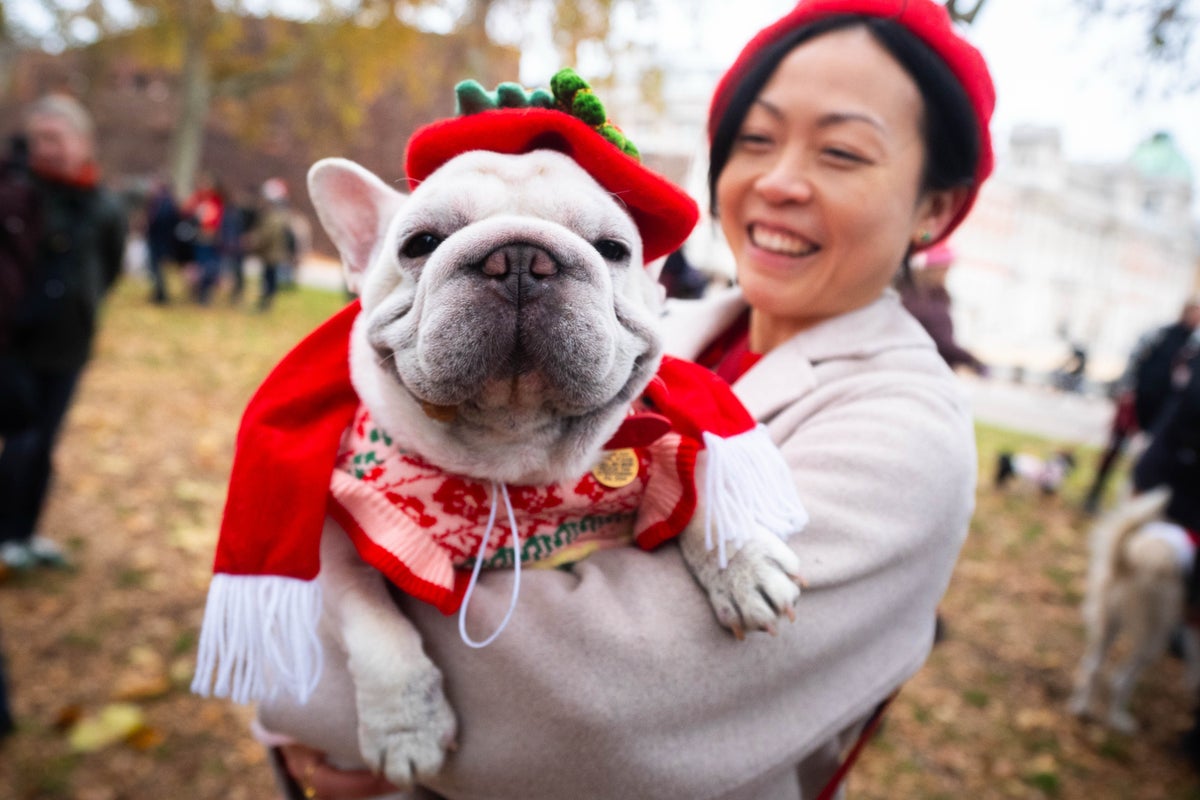
A stocking and a wrapped gift? A holiday sweater with antlers on it? A photo sitting huddled on Santa’s lap? A hug from Uncle Bob?
These may all seem like fun and they may come with the best of intentions…but have you considered what your dog really would like as a holiday gift?
From an animal welfare perspective, we need to give our animal companions positive emotional experiences, along with the ability to make choices and to behave in ways that are natural to them. In her book Justice for Animals, philosopher Martha Nussbaum argues that animals should have the opportunity to flourish in their own ways.
This is especially important during the holidays, when we tend to be busier — leaving dogs alone for longer stretches, or surrounding them with noise and people.
Perhaps your dog would like time to rest in a snowy field and watch the world go by? Maybe they would appreciate a store-bought gift that brings pleasure — a new toy for games of “find it,” or something they can safely chew?
Or perhaps, during this season when humans are pulled in many directions, the best gift you can give your dog is your full presence: phone down, screens off, just being with your dog.
Give space for ‘dogness’
Research suggests that our interpretations of a dog’s emotional state are influenced by the situation around them. We might see a cheery Christmas scene and miss that our dog’s body is telling a different story:
the head turned away, whites of the eyes suddenly visible, tension pulling across the muzzle, the yawn or lip lick. These can all be signs that a dog is uncomfortable or stressed.
At the University of Guelph’s FIDO Research Lab, we study the nuances of dog-human relationships, including what relationshops might feel like for dogs themselves. Our recently published study found people tend to view their dogs as sentient beings with complex inner lives. They described trying to understand and accommodate their dogs’ individual experiences, preferences and needs.
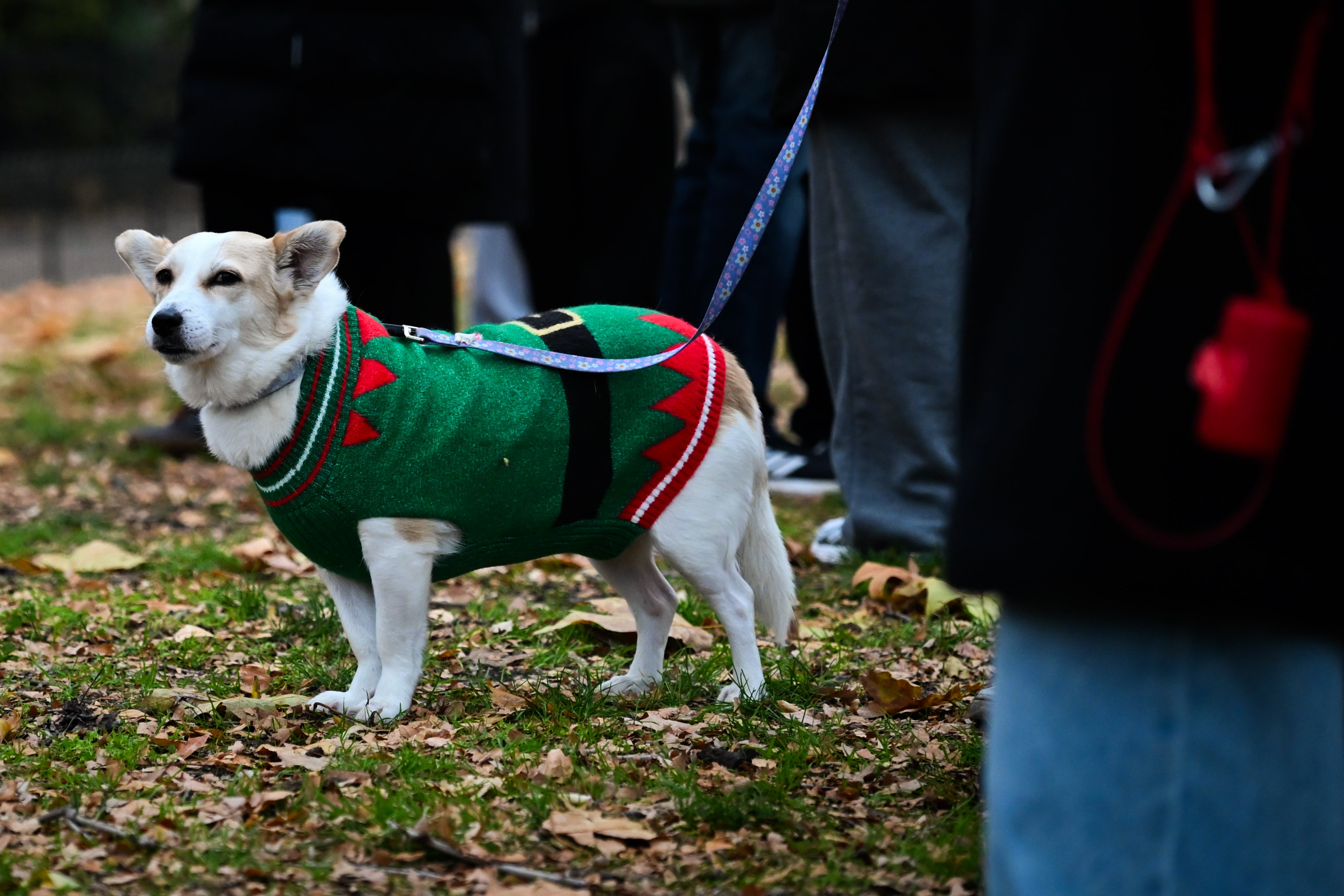
At the same time, participants also described ignoring their dogs, confining them, controlling their movements, subjecting them to unwanted interactions and expecting them to conform to human-centred expectations for “polite” canine behaviour.
Many behaviours that are natural to dogs — barking, licking, chasing, chewing, foraging and even urinating on neighbours’ lawns — conflict with human preferences. We love our pet dogs, but our modern human world often leaves little space for “dogness.”
The gifts of welfare and flourishing
Animal welfare frameworks encourage us to consider the animal’s experience more fully. They can provide a useful starting point for thinking about the kinds of gifts that might be meaningful to our dogs.
Current approaches to animal welfare emphasize not only minimizing negative experiences such as fear, hunger and pain, but also ensuring the animals in our care experience positive emotional states, have opportunities to express natural behaviours and can exercise choice in their interactions with other animals, humans and the environment.
What might that look like at Christmas?
Maybe this year’s gift is a small but meaningful tweak with welfare in mind. For example, you could arrange for a neighbour to stay with a dog who is distressed when left alone. You could finally call the vet to figure out that skin issue that comes and goes. You could install a mat at the bottom of the stairs so they don’t slip anymore.
Social time and boundaries
Allowing a dog opportunities to be social in ways that matter to them can be an especially meaningful gift. That includes giving them choice in when, how and with whom they interact.
For some dogs, the best gift might be keeping them safe from unwanted interaction: Establishing careful boundaries with children and saying no to strangers who want to pet them. It might be giving your dog a safe, comfortable place to retreat to when the holiday commotion is too much.
About the author
Andrea V. Breen is an Associate Professor, Family Relations and Human Development, University of Guelph
This article is republished from The Conversation under a Creative Commons license. Read the original article.
Another gift might be to focus on safe ways to express themselves more fully as dogs — more opportunities to follow their noses, places to dig in the dirt, opportunities to forage safely for still-green stalks of sweet grass or move and play in ways they enjoy.
The gift of your presence
When I’m especially busy with work, kids and caring for older family members, my dogs can fall into the background. They’re fed. They’re walked. But my attention is elsewhere. At times like these, I sometimes set a timer: 20 minutes sitting with my dogs. Maybe 10 if that’s really all I’ve got.
But I go all in. I tune my attention to them. To their bodies and their presence. To who they are beyond their assigned role as my pets.
For me, it’s a practice in paying attention. It brings me back to my dogs, and the connection between us.
This holiday season I look forward to lounging with my dogs in the warm light of the afternoon sun. To making toys for them out of recycling and old socks. To the treat searches and games of “find it” they love. To noticing and saying yes to their invitations to play. To following their noses on slow sniffy walks.
I look forward to being grateful for these dogs in front of me, exactly as they are.